
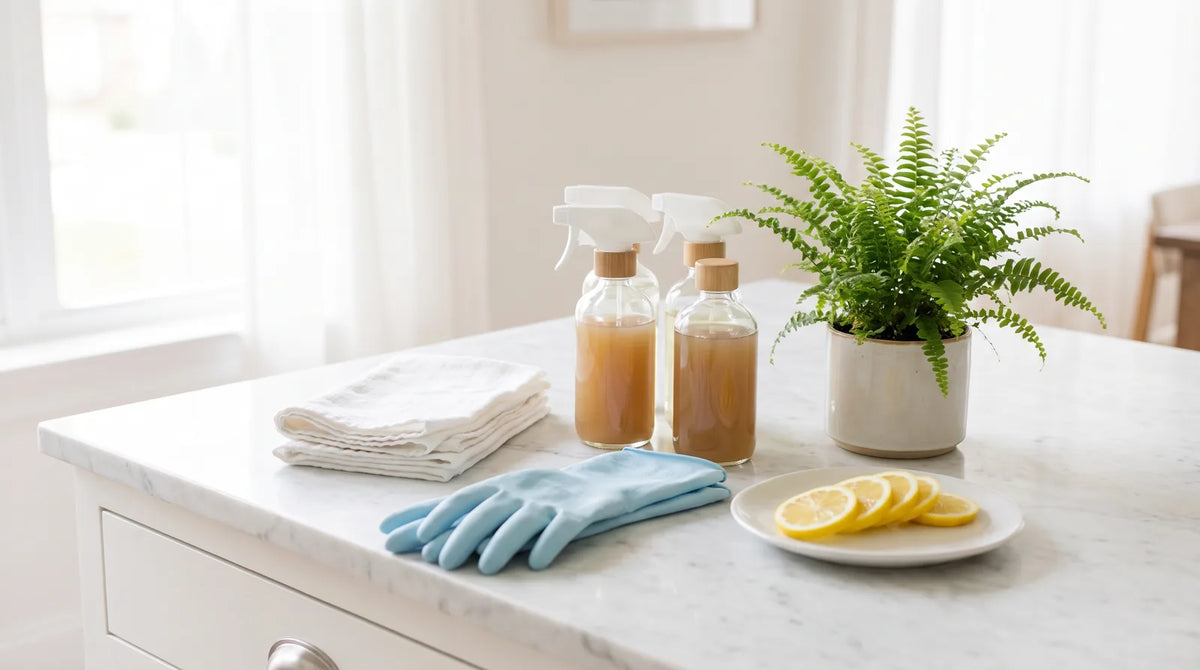
When cleaning the home, get to know the surface first, then use the right product in the right amount. The same cloth, quantity and dwell time do not suit every room. Reading labels, distinguishing between types of dirt and stopping the application at the right point help you build a routine that reduces how often work has to be repeated.
1. Look at the surface material, not the name of the room
A bathroom may hold ceramic, marble, metal plating and painted cabinets all at once. So do not apply a product sold for the bathroom to every item in the room. If you do not know the material, find the care page of the furniture or fittings manufacturer. Assess coatings, lacquer and joints separately in particular; even a single item may have different parts calling for different methods.
2. Identify the type of visible dirt
Dry dust, stuck-on food residue and limescale build-up are not the same job. Remove the parts that lift away easily first, then choose the right product for what is left. Do not treat every mark on the worktop as grease or every white patch in the shower as limescale. Mistaking wear or discolouration on a surface for dirt and scrubbing it over and over may get you nowhere.
3. Set the dose by the format you are using
A diluted liquid, a ready-to-use spray, a wipe and a single-dose powder cannot be measured against one another. Do not use a bottle cap as a measuring cup unless the volume is marked on it. The examples below are the instructions of different Herbaclean products; do not carry an amount from one row over to another product.
| Product | Usage information | Important limit |
|---|---|---|
| Surface Cleaner | 100 ml to 5 L of water | Washable hard surfaces compatible with the product |
| Wood Cleaner | 100 ml to 5 L of water | Controlled moisture, in line with the wood's care instructions |
| Bathroom & Toilet Cleaner | Sprayed onto a suitable surface; separate instructions for inside the toilet bowl | Not used on marble and lacquered surfaces |
| Toilet Cleaner Powder | One 100 g sachet into the toilet bowl; 2–3 minutes' dwell time | Not a cistern or drain-unblocking product |
4. Do a small-area test on a new surface
Do the first application on a small, hidden section, using the product as you normally would. Once it has dried, check the colour, the sheen and the texture of the surface. Even if the test looks fine, do not move on to a surface the label explicitly forbids. A small-area test is not permission that cancels out a material incompatibility.
5. Do not mix products together
Do not create a new mixture by adding different cleaning products to the same bucket or surface. Bleach in particular must not be combined with other cleaners. Use a single product by the method on its label; when you do not get the result you expected, stop the application and reconsider your choice of product and surface rather than adding a second chemical.
6. Separate cloths by job
Give kitchen, bathroom and furniture cloths their own places. Using colours or labels makes it easier for everyone sharing the work at home to keep to the same system. Check that no hard particles are left on the cloth; being microfibre does not prevent scratching in every case. Turn to a clean face when one gets dirty, and once the cleaning is finished, wash and dry the cloth according to its own instructions.
7. Let a product dwell only where it says to
Leaving every cleaner on a surface for a long time is not right. For instance, the dwell time of a liquid bathroom product applied inside the toilet bowl does not count as a dwell time for a cabinet door or a tap. Read the rinsing and dwell steps before you start; using a timer on your phone makes it easier to keep track of the time while you get on with something else.
8. Ventilate the space and prepare your equipment
Provide ventilation while using products indoors and wear the protective equipment stated on the label. Before you start, make sure you can use a window or the ventilation system. Keep products out of children's reach while you work. When you take a break from cleaning, do not leave open bottles, buckets and used cloths lying around.
9. Keep rinsing and drying separate
Rinsing means removing the product from the surface with water; drying means taking away the moisture that is left. Leaving pools of water on wood wiped with a no-rinse product is not appropriate. On food-contact areas and on special items, follow the instructions of both the product and the item. For cleaning electronic devices, likewise take the device manufacturer's method as your guide.
10. Judge the result once it has dried
Some marks may not show while a surface is still wet. When the job is finished, check it from the angle the light comes from; if there is a sticky feel, a streak or a stain, do not immediately add more product. Review the amount you used, the cleanliness of the cloth and whether the material was suitable. Permanent dulling or damage to a coating may not be a problem that more intensive cleaning will solve.
Frequently asked questions
Does more detergent clean better?
Going above the recommended amount is no substitute for correct application. Measure the product's dose; for stubborn dirt, follow the separate method on the label if there is one.
Can I use hot water on every surface?
No. The temperature is set by the surface's care instructions and the product label. Do not apply a general hot-water recommendation to delicate coatings or special items.
Does a room that smells clean count as cleaned?
Scent does not show that visible dirt has been removed or that the process is complete. Check by looking at the surface, the cloth you used and the steps of the application.
Is a single product enough for the whole house?
That depends on the materials in your home. Establish where the general cleaner is suitable; plan surfaces and jobs that need special care separately.